
A delivery can arrive at the right building, at the right time, and still go wrong at the final point of handover. For legal papers, IT equipment, controlled stock or high-value goods, the instruction to verify recipient handover identity is not an administrative extra. It is the control that confirms the consignment has reached the person authorised to receive it.
For urgent same-day work, the pressure to complete a delivery quickly is real. But speed should never mean handing an item to the first person who answers a reception desk, opens a door or says they are expecting a parcel. A clear handover process protects the sender, the recipient and the courier, while creating an accurate record if a delivery is questioned later.
Why recipient identity matters at handover
Many delivery failures are not caused by a vehicle delay or a lost consignment. They happen because the recipient details were vague, a nominated contact was unavailable, or an item was accepted by someone without authority. Once sensitive documents or valuable equipment are handed over, recovery can be difficult and time-consuming.
The risk increases where deliveries involve shared offices, construction sites, hospitals, schools, large warehouses, serviced buildings or multi-tenant locations. Reception teams may accept deliveries for several businesses. Security staff may change during the day. A recipient may send a colleague without telling the courier in advance.
For a direct, dedicated same-day delivery, there are no depot transfers between collection and destination. That gives the sender greater control over the consignment journey, but the final handover still needs equally careful control. Identity checks make sure that direct handling results in a direct, accountable delivery.
Set clear recipient instructions before collection
The most effective identity check begins before the driver is dispatched. The sender should provide the full delivery address, the recipient’s name, a direct contact number and the organisation or department where relevant. “Reception” or “site office” may be useful location information, but it is rarely enough on its own for a sensitive consignment.
For items that must reach a particular person, state this clearly in the booking instructions. For example: “Release only to Priya Shah, Head of IT,” is materially different from “Deliver to IT department.” If another person may receive the item, provide their name in advance as an authorised alternative.
A useful instruction set also establishes what should happen if the named person cannot be reached. The courier should not be expected to make that decision without guidance. The sender can specify whether the item may be released to a named colleague, held while the recipient is contacted, or returned to the collection point if authority cannot be confirmed.
This level of detail is particularly valuable for time-critical deliveries. It avoids a driver arriving promptly only to face a preventable delay because nobody knows who can sign, who can provide identification or whether a substitute recipient is permitted.
Match the check to the consignment risk
Not every consignment needs the same level of verification. A replacement box of general office supplies may only require a named signature and proof of delivery. A laptop containing business data, an original contract, medical equipment or confidential documents may need a stronger process.
The right approach depends on the value, sensitivity and consequence of a mistaken handover. More checks can add a few minutes at delivery, but they can prevent a serious loss. The aim is proportionate control, not unnecessary friction.
For high-risk items, agree the handover requirement at booking. This could include checking photo identification against the named recipient, confirming a pre-agreed delivery code, obtaining a signature from an authorised individual, or asking the recipient to confirm a delivery call-back number. Where identification is used, the courier only needs to inspect the relevant information. There is no need to record more personal data than the delivery process requires.
How to verify recipient handover identity on site
At the delivery address, the driver should first confirm they are at the correct location and ask for the named recipient. If the individual is unavailable, the driver should check the booking instructions before releasing the item to anyone else.
A professional handover is based on matching details, rather than relying on assumptions. The recipient should be able to confirm the sender, the nature of the consignment or a reference known to both parties. For controlled deliveries, they may also need to provide the agreed code or show identification that matches the delivery name.
If an alternative recipient is presented, the driver should verify that person against the pre-authorised details. Where no authorisation exists, the safest action is to contact the sender or named recipient for confirmation. Verbal approval should be recorded with the time, the name of the person providing it and the person receiving the goods.
Drivers should be especially cautious with requests such as “I will take it up to them,” “They told me to collect it,” or “Everyone leaves parcels here.” These may be routine at some sites, but routine is not the same as authorised. A secure delivery process requires evidence that the handover is permitted for that particular consignment.
Use a delivery code for sensitive consignments
A one-time handover code is often one of the simplest controls for valuable, confidential or urgent items. The sender shares the code directly with the intended recipient, who provides it when the driver arrives. The driver can then release the consignment only when the code matches the booking record.
Codes work well because they avoid asking a recipient to share excessive personal information and are easy to use at offices, homes and operational sites. They are not suitable for every delivery. If the recipient cannot receive a message or may be working in an area with restricted phone access, an authorised alternative and a direct contact number should be agreed in advance.
For organisations with regular urgent transport needs, a consistent code process can be built into internal dispatch procedures. It is particularly effective when equipment is being sent between sites, when replacement stock is being delivered out of hours, or when several people could plausibly claim the item.
Capture proof that stands up to scrutiny
Identity verification is only useful if the handover record is clear. Proof of delivery should show who received the consignment, when it was received and where the handover took place. Depending on the service and consignment instructions, this may include the recipient’s printed name, signature, time stamp and delivery location.
GPS-tracked vehicles provide a further operational record of the delivery journey and arrival point. Combined with an accurate proof-of-delivery record, this gives the sender a stronger account of the consignment’s movement from collection to final handover.
Photographic evidence can be useful in certain situations, such as confirming a specified safe location or the condition of a large item at delivery. However, photographs should be used carefully, with respect for site rules, privacy and security restrictions. They should not replace checking that the person receiving the consignment is authorised.
For pallets, oversized items and equipment that require unloading, the recipient should also inspect the goods before accepting them where practical. Any visible damage, shortage or packaging concern should be noted immediately. The person signing should have authority not only to receive the item, but also to acknowledge its condition.
What to do when identity cannot be confirmed
The correct response to an unsuccessful identity check is not to improvise. If the named recipient is unavailable, the alternative is not authorised, or the delivery code cannot be confirmed, the driver should pause the handover and seek instruction from the sender or an authorised contact.
There may be legitimate reasons for a change. A meeting may have overrun, a site manager may have left unexpectedly, or a recipient may be working remotely. In each case, the sender can authorise a revised handover arrangement. That approval should be specific: identify the new recipient, confirm how they will be verified and record the instruction.
If confirmation cannot be obtained, retaining control of the consignment is usually the safer option. A short delay is preferable to delivering confidential information, valuable equipment or critical stock to the wrong person. It may affect the delivery timetable, but it protects the purpose of the service.
Build identity checks into routine dispatch
Businesses that arrange frequent urgent deliveries should not rely on individual memory. Create a standard booking process that asks for the named recipient, a direct number, authorised alternatives, the required proof of delivery and any special verification method. This makes urgent bookings faster to place without lowering the standard of control.
Review the process after any disputed handover, near miss or recipient change. If the same issue occurs repeatedly at a site, refine the instruction. A named receiving point, a pre-agreed code or a clear escalation contact can remove uncertainty on future deliveries.
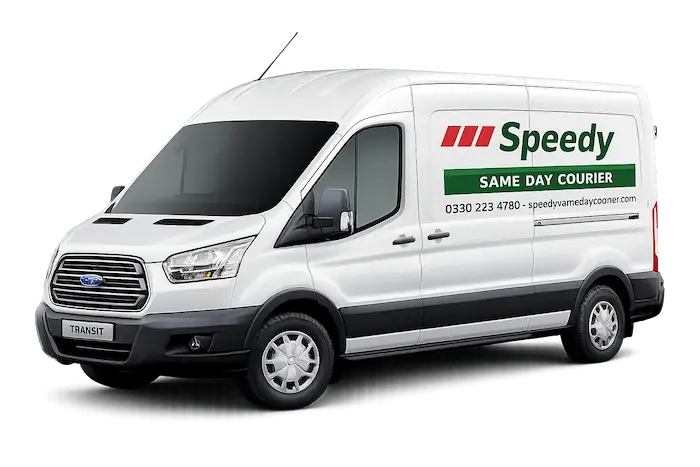
Speedy Same Day Courier supports urgent UK mainland deliveries with dedicated, GPS-tracked transport and professional drivers. Clear recipient instructions help ensure that the same care applied to rapid collection and direct transit continues through the final signature.
The final handover is where delivery responsibility changes hands. Treat it as a controlled moment, give the driver the information needed to make the right decision, and the urgent consignment can arrive quickly without leaving accountability behind.