
A missed delivery rarely stays a delivery problem for long. It becomes a delayed installation, an idle engineer, a postponed legal filing, a stock gap, or a client wondering why nobody planned ahead. That is exactly where a dedicated b2b courier service earns its place – not as a convenience, but as a control measure for time-critical business transport.
For many organisations, standard parcel networks work well until the consignment becomes urgent, high value, fragile, oversized, or simply too important to pass through multiple depots. At that point, the question changes. It is no longer about the lowest transport cost. It is about whether the item gets from A to B directly, on time, and with full visibility.
What a dedicated b2b courier service actually means
A dedicated service means the vehicle and driver are assigned to your job alone. Your consignment is collected and taken straight to its destination without being grouped with unrelated freight, handed between hubs, or delayed by route changes for other deliveries.
That direct model matters because every additional touchpoint adds risk. Labels can be misread, packages can be loaded in the wrong place, and timing becomes harder to predict when a parcel is one stop among many. With a dedicated same day courier, the chain of custody is much clearer. The item is collected, loaded, tracked, and delivered by a single driver following a direct route.
For businesses sending contracts, IT equipment, medical components, production parts, exhibition materials, or palletised goods, that simplicity is often the difference between a routine delivery and a costly disruption.
Why businesses choose direct delivery over standard networks
The strongest reason is urgency. If a site is waiting for replacement equipment, or a legal team needs original documents delivered that day, there is little room for a broad delivery window. A dedicated vehicle gives you a planned collection time, a direct journey, and a far tighter view of arrival.
Security is another factor. Sensitive business consignments should not pass through unnecessary handling stages. A GPS-tracked, fully insured vehicle with a vetted driver offers a level of accountability that is difficult to match in a shared network model.
Then there is practicality. Some shipments do not fit neatly into standard parcel dimensions or workflows. Longer items, heavier equipment, multiple boxes going to one location, or loads needing a tail-lift all require the right vehicle rather than a generic service level. A courier operation with motorbikes, cars, small vans, long wheelbase vans, XLWB vans, and tail-lift Lutons can match the transport to the job instead of forcing the job into the wrong vehicle category.
When a dedicated b2b courier service is the right choice
Not every shipment needs a direct dedicated vehicle. If the item is low value, non-urgent, and timing is flexible, a scheduled network may be perfectly adequate. The point is not to over-specify every movement. The point is to recognise when delay carries a higher cost than transport.
A dedicated b2b courier service tends to make sense when downtime is involved, when deadlines are fixed, or when the consignment would be difficult to replace. That includes failed parts deliveries to engineering sites, urgent branch-to-branch stock movements, last-minute event materials, tender documents, IT hardware for office rollouts, and replacement components needed to keep a production line running.
It also suits organisations that want fewer variables. If your operations team is managing multiple moving parts already, a direct courier service removes the uncertainty of depot scans, transfer stages, and broad ETA ranges. You know who has the load, where it is, and where it is going.
The real value is risk reduction
Businesses often compare courier options on price first. That is understandable, but urgent transport is usually a risk calculation before it is a rate comparison.
If a missing server delays a site launch, the courier fee is not the main cost. If a forgotten document causes a hearing issue or contract delay, the delivery charge is not what anyone remembers. If retail stock misses a promotion window, the financial impact goes well beyond the transport invoice.
A direct same day service reduces exposure in three ways. It shortens transit time, limits handling, and improves visibility. None of those guarantee perfection, but they materially lower the chance of avoidable failure. For many commercial users, that is the real return on investment.
What to look for in a dedicated courier provider
Speed matters, but speed on its own is not enough. A useful provider should be able to collect quickly, but also explain exactly how the delivery will be handled. Collection within 60 minutes in most areas is valuable only when it is backed by proper dispatch, the right vehicle, and clear communication.
Tracking should be real time, not vague. GPS-tracked vehicles give operational teams a practical way to monitor progress and update colleagues or customers without chasing for manual status checks.
Insurance and driver standards matter as well. If you are moving valuable goods, confidential documents, or fragile equipment, the provider should be able to offer confidence that the consignment is in professional hands from collection to delivery.
Vehicle range is another practical test. A provider with only one or two vehicle types may struggle when the shipment changes shape. A document run, a boxed parts delivery, and a pallet movement all require different capacity and handling. Flexibility at the fleet level usually translates into fewer booking problems and fewer compromises.
Dedicated delivery for different business teams
The need for urgent transport appears in different ways across a business. Office managers often need fast movement of signed documents, keys, access equipment, or replacement devices between sites. IT teams use dedicated couriers when laptops, servers, networking kit, or peripherals must reach staff or locations without delay.
Procurement and logistics teams rely on direct delivery when supplier timelines slip and production or fulfilment cannot wait. Facilities teams often need urgent movement of parts, tools, or compliance-related materials to keep locations operating safely.
Legal and professional services firms face a different pressure. Their consignments are often compact, but the timing and sensitivity are high. Direct delivery with clear chain of custody is far more suitable than a general delivery route when the contents are commercially or procedurally important.
Why same day matters in practice
Same day delivery is not only about speed for its own sake. It is about preserving the original plan when something changes at short notice.
A supplier misses a slot. A branch runs short of stock. A client requests revised paperwork. A technician arrives on site and discovers one critical part is missing. These are ordinary business problems, but they become expensive when the transport response is slow or uncertain.
A same day dedicated courier gives businesses a practical recovery option. Instead of waiting for the next available cycle, they can move goods immediately, often with rapid collection and direct onward transport. That keeps projects moving and limits the knock-on effect across teams, customers, and sites.
The trade-off: higher transport cost, lower operational friction
A dedicated service will usually cost more than sending an item through a shared parcel network. That is the trade-off, and it should be assessed honestly. You are paying for exclusivity of vehicle, direct transit, faster collection, and tighter control.
Where businesses make poor decisions is assuming every delivery should go the same way. The better approach is to match service level to business impact. Use standard methods where time and handling risk are acceptable. Use a dedicated same day option where delay, loss, or excess handling would create operational or commercial damage.
That balance is what good transport buying looks like. It is not about choosing the fastest option every time. It is about knowing when certainty is worth paying for.
Choosing a courier partner, not just a vehicle
When urgent deliveries are occasional, online booking and quick quoting may be enough. When they happen regularly, account support becomes more valuable. Repeat users benefit from a provider that understands collection points, site access requirements, preferred delivery processes, and the typical size and urgency of consignments.
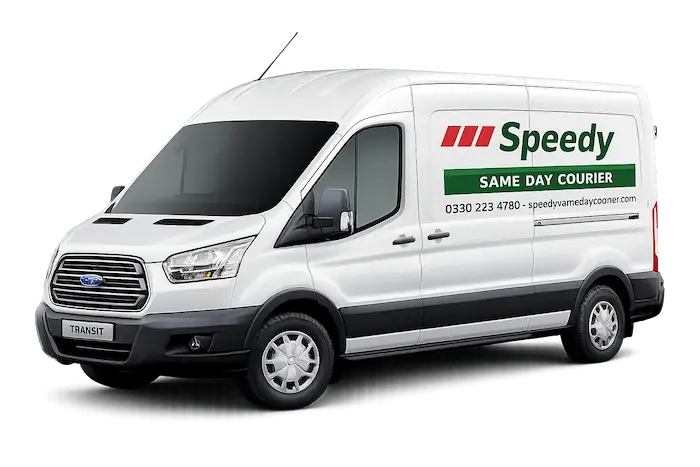
That familiarity reduces admin and helps bookings move faster when time is tight. For businesses with recurring urgent transport needs, a provider such as Speedy Same Day Courier becomes less of a last-minute fix and more of an operational back-up built into normal planning.
The strongest dedicated courier services do not just move items quickly. They reduce uncertainty at the exact point where uncertainty causes the most damage. If your business occasionally faces urgent deliveries where timing, visibility, and direct handling cannot be left to chance, that is usually the moment a dedicated service stops being optional and starts being sensible.