
A missed delivery window can mean more than a late parcel. It can stop an engineer reaching site, delay a legal filing, hold up stock for a customer, or leave critical IT equipment sitting in the wrong depot. That is why the choice between dedicated courier vs pallet network matters. Both move goods, but they work in very different ways, and the right option depends on how urgent, sensitive, or time-critical your consignment really is.
For many businesses, the decision comes down to control. If your goods can move through a shared distribution system and arrive within a standard window, a pallet network may be suitable. If the load needs direct transport, tighter timing, and fewer handling points, a dedicated courier is usually the safer choice.
Dedicated courier vs pallet network – what is the difference?
A pallet network is a hub-and-spoke system. Your pallet is collected locally, taken to a regional depot, sorted with other freight, trunked to another hub, then sent out for final delivery. It is built for efficiency across large volumes. That makes it useful for planned freight movements where delivery can fit within a standard service structure.
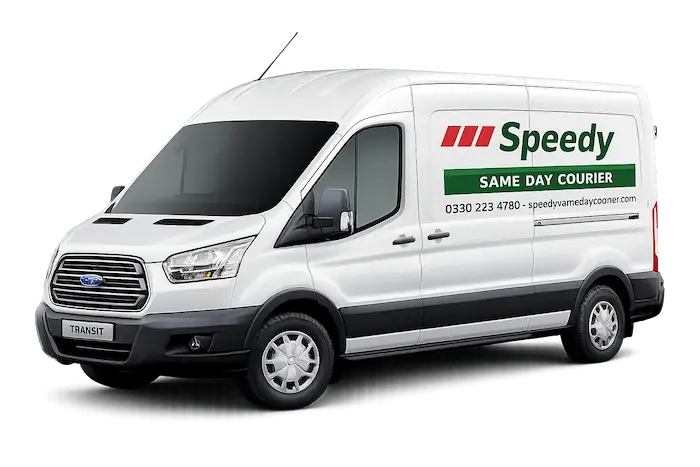
A dedicated courier works differently. One vehicle is assigned to your consignment and takes it directly from collection to delivery. There are no depot transfers, no shared trunking stages, and no waiting for the pallet to be grouped with other freight. For urgent same day work, that direct route is the core advantage.
This difference in handling model affects almost everything else – speed, visibility, risk, flexibility, and cost.
When a pallet network makes sense
Pallet networks can be a practical choice when the shipment is not especially urgent and the goods are stable enough to move through multiple handling stages. If you are sending palletised stock to a warehouse, replenishing non-urgent inventory, or planning routine distribution in advance, the network model can work well.
It also suits consignments that fit neatly into standard pallet sizes and do not require special attention beyond normal freight handling. In those cases, the shared system helps spread transport costs across multiple deliveries.
That said, a pallet network is designed around schedule and consolidation, not immediate response. You are buying into a system that prioritises route efficiency over direct movement. If timing slips by a few hours, or even to the next delivery cycle, that may still fall within the service model.
For some businesses, that is acceptable. For others, especially where downtime, missed appointments, or contractual deadlines are involved, it is not.
When a dedicated courier is the better fit
A dedicated courier is built for consignments that cannot afford delay or extra handling. If a part is needed to restart production, documents must arrive that day, or fragile equipment needs controlled transport, direct delivery offers a much higher level of certainty.
Because the vehicle is assigned to one job, collection can often take place quickly and the goods travel straight to the delivery point. That matters when every hour counts. It also matters when you need accountability. With a dedicated service, there is a clear chain of responsibility from collection to drop-off.
This is especially relevant for high-value items, sensitive documents, medical supplies, exhibition materials, IT hardware, and urgent pallets. Even when the consignment is large, direct transport can reduce the operational risk that comes with hub transfers and repeated loading.
For businesses dealing with time-critical work, that control is often worth more than the difference in headline transport price.
Speed is not the only issue
People often frame the choice as simple speed versus cost, but that is too narrow. The more useful comparison is predictability versus shared-network efficiency.
A pallet network can offer a reasonable service window, but the pallet will normally pass through several touchpoints before delivery. Every touchpoint introduces another opportunity for delay, misrouting, queueing, or handling damage. That does not mean networks are unreliable by default. It means the model has more variables.
A dedicated courier strips much of that out. The route is simpler. The timing is clearer. The consignment stays on one vehicle. If you need real-time location updates and direct communication around collection and ETA, the service is naturally better suited to that level of visibility.
In urgent logistics, fewer variables usually mean fewer problems.
Handling risk and goods security
If your load is fragile, valuable, or business-critical, the handling chain matters as much as transit time. A pallet network may involve forklifts, cross-docking, depot sorting, and overnight storage depending on the service. That is part of normal pallet distribution, but it is not ideal for every shipment.
A dedicated courier reduces those handovers. Goods are loaded once, secured in the right vehicle, and delivered directly. For delicate equipment, confidential materials, or anything where condition on arrival is essential, this can materially lower the risk.
Security is also easier to manage in a direct model. A fully insured, GPS-tracked dedicated vehicle gives far more control than a consignment moving through a shared freight chain. If your customer expects a precise arrival window or signed handover at a specific site, that direct service is easier to manage professionally.
Cost – where the real comparison sits
At first glance, pallet networks often look cheaper. For standard, non-urgent freight, they often are. But cost should be measured against the consequence of delay, damage, or failed delivery.
If a late pallet leads to idle labour, a missed installation, a site revisit, a lost sale, or service credits, the cheaper option may stop being cheaper very quickly. Many businesses learn this the hard way when they use a shared freight model for a consignment that really needed direct transport.
A dedicated courier usually costs more per movement because you are paying for an entire vehicle and driver allocation. But you are also paying for speed, direct handling, and tighter control. Where timing has commercial consequences, that price difference can be easy to justify.
In other words, the question is not only what the transport costs. It is what failure would cost if the job goes wrong.
Choosing the right service for palletised goods
One common mistake is assuming palletised freight must go through a pallet network. That is not always true. If the goods are on a pallet but still urgent, a dedicated same day courier with the right vehicle can often move them directly.
This is where vehicle flexibility matters. A small pallet may fit in a van with no issue. Heavier or bulkier consignments may need a tail-lift Luton. The right provider will match the load to the vehicle rather than forcing the shipment into a standard network process.
That is particularly useful when collection needs to happen fast, access at either end is restricted, or the consignee cannot wait through a broad delivery window. A direct vehicle keeps the job simple.
How to decide in practice
If the consignment is routine, palletised, and not time-sensitive, a pallet network may be the efficient option. If it can tolerate depot handling and a standard delivery timetable, the network model is often enough.
If the shipment is urgent, high-value, fragile, customer-critical, or needed at a specific time, a dedicated courier is usually the better decision. The same applies when the cost of delay is high, when you need tighter visibility, or when you simply cannot risk extra handling.
For many operations teams, the practical test is straightforward. Ask what happens if the goods arrive late, damaged, or without a clear delivery update. If the answer is inconvenience, a pallet network may be fine. If the answer is downtime, missed revenue, or a failed job, direct transport is the safer choice.
Dedicated courier vs pallet network for urgent delivery
When urgency is real, the argument becomes clearer. A pallet network is built to move freight efficiently within a system. A dedicated courier is built to move your consignment now.
That distinction matters for same day requirements. If you need a fast collection, a direct route, GPS-tracked progress, and confidence that the goods are not being transferred between depots, the dedicated model is far better aligned to the job. For urgent UK mainland deliveries, that direct approach gives businesses and private customers more certainty at the moment they need it most.
Speedy Same Day Courier operates on exactly that basis – matching urgent consignments to the right vehicle and moving them door to door without unnecessary handling.
The best choice is rarely about picking one service type for everything. It is about understanding the risk profile of each shipment, then choosing the transport model that gives you the right level of speed, control, and reassurance.